
The Right Materials and Systems for Your Horse Stable
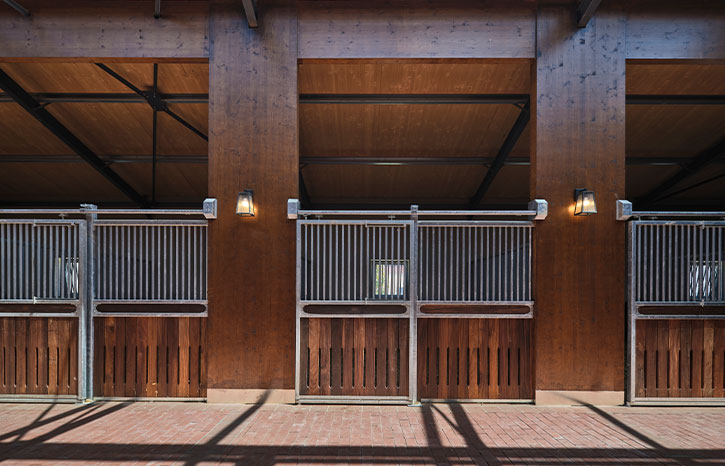
Behind every impressive horse stable lies a carefully chosen palette of materials and systems that ensure longevity and comfort. The selection of the right construction materials is not merely a technical decision—it is an architectural one. It influences safety, maintenance requirements, climate, and not least the visual identity of the entire facility.
At Equine Design Studio, we develop a bespoke material concept for every project, one that unites technical demands with aesthetic vision.
Safety First
Rounded edges, impact-resistant walls, and non-slip flooring are non-negotiable. German engineering in stable equipment sets global standards—yet true design takes one step further and harmonises these elements within an elegant architecture.
Of particular importance: all metallic components in horse-occupied areas should be free of sharp edges and protruding fixings. Hot-dip galvanised surfaces offer long-term corrosion protection and are low-maintenance—a decisive advantage in intensive stable operation.
Structural Integrity
Steel frames provide stability; timber adds warmth. A combination of hot-dip galvanised steel fronts and natural timber infills offers longevity without visual heaviness. This material combination has proven itself in European premium facilities over decades.
The load-bearing structure of a stable complex must be planned for a minimum of 50 years. Weather-resistant steel frames with timber cladding satisfy both structural and design requirements at the highest level. The choice of timber species—Douglas fir, larch, or thermally modified wood—determines durability and maintenance demands.
Lighting and Ventilation Systems
Translucent roof panels, high windows, and intelligent louvre openings enable maximum use of natural daylight. Fresh air supply reduces ammonia concentrations, protects the horses’ respiratory tracts, and keeps interior surfaces in prime condition longer.
Modern stable doors for horses—whether sliding, swing, or Dutch doors—combine functionality with design freedom. Quality stable systems offer a wide range of front configurations that can be individually tailored to the overarching architectural concept.
Surfaces and Maintenance
Powder-coated steel resists corrosion permanently; solid timber doors age with dignity. Invest in surfaces that simplify cleaning and complement your architectural vision. A poorly chosen surface costs a multiple of its original saving potential over the service life of a building.
Special attention should be given to floor coverings: rubber mats in stable aisles and boxes reduce noise, protect joints, and are easy to clean. Concrete surfaces should always be finished with an appropriate coating to minimise slip risk and prevent dust formation.
Sustainability and Efficiency
Material choices directly influence energy consumption. Insulated panels, recycled materials, and LED systems reduce the ecological footprint and operational costs. Renewable raw materials such as timber from sustainably managed forests are both ecologically and economically sound.
Equine Design Studio analyses the life cycle costs of every material selection. A slightly higher initial investment in high-quality materials invariably results in lower maintenance expenditure—and a stable that retains its visual appeal over decades.
The Perfect System Combination
No single manufacturer offers the optimal solution for every project. At Equine Design Studio, we combine technical excellence from leading European manufacturers with regional artisanal craftsmanship to create material concepts that are as individual as the facilities themselves.
Whether modular box systems, custom joinery, or specialist groundwork: for every project we identify the optimal combination of performance, aesthetics, and value for money.
Let Equine Design Studio develop the ideal material concept for your equestrian project.